
Seeing Behavior as a Signal, Not a Struggle
- Mārupes Privātā Pamatskola
- Oct 17
- 2 min read
Updated: Nov 7
Have you ever noticed that sometimes a child’s behavior seems “disobedient,” but actually it’s hiding something entirely different?
The brain-based approach* is built on the idea that behavior is always a message about a child’s inner state. It’s a signal — not rebellion against rules, but an attempt to manage emotions, stress, or uncertainty.
A child’s brain, like ours, is constantly seeking balance and a sense of safety. When that balance is missing, a child instinctively does what helps them feel better — even if it looks like “wrong” behavior from the outside.
When we, as adults, learn to see the need behind the behavior, we can help children develop self-regulation skills and healthier ways to cope with their emotions.
Everyday Examples
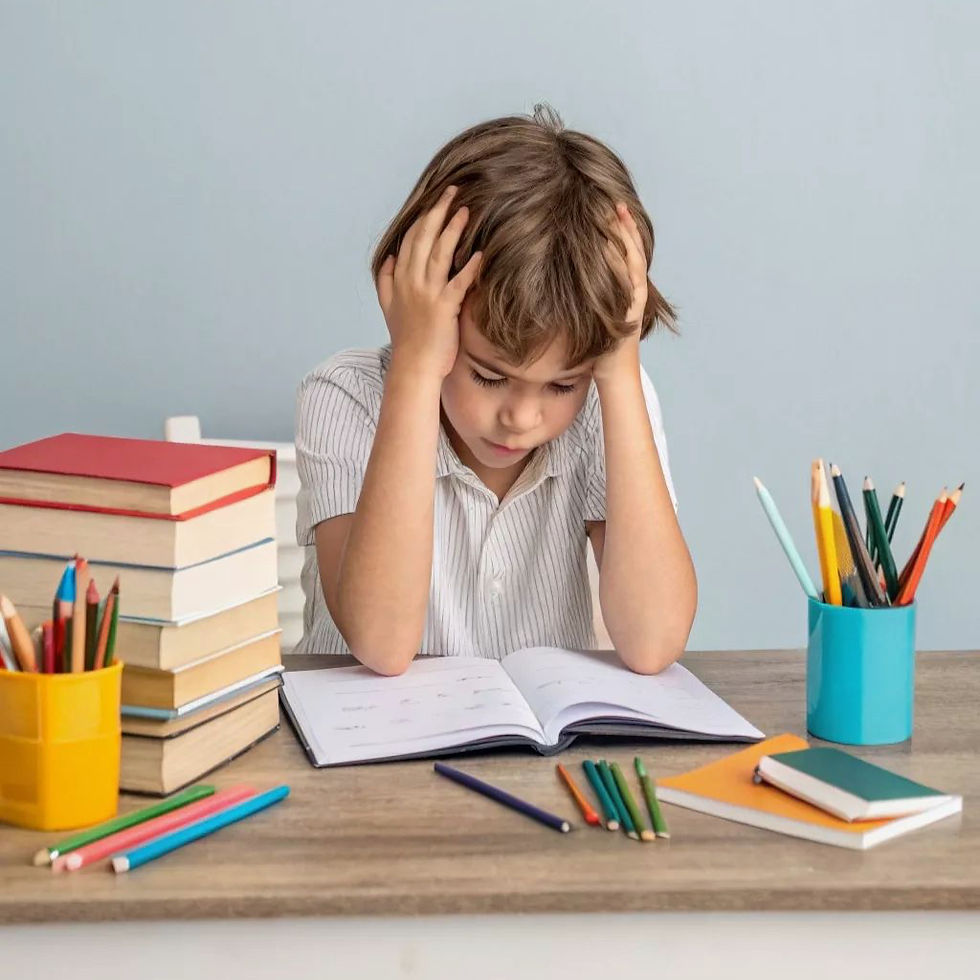
When a child can’t sit still in class or during homeworkIt may look like inattention or stubbornness, but often the child’s brain is just seeking movement to activate or calm themselves. 🦋 Helpful: short movement breaks, deep breaths, stretching, running outside, or a brief walk between lessons.
When a child talks back or gets upset over small thingsThis behavior often hides stress, fatigue, or inner insecurity. The brain is “overheated” and switches into protection mode. 🦋 Helpful: calm and empathetic responses (“I can see this is hard for you right now”), and the opportunity to talk later when emotions have settled.
When a child laughs or acts “silly” in situations that seem seriousLaughter is often a way for the brain to release tension. It’s not disrespect — it’s stress relief. 🦋 Helpful: acknowledge it as a natural reaction, then gently redirect attention.
When a child “forgets” instructions or seems completely “zoned out”Sometimes the brain simply stops processing information under stress. This isn’t laziness, but a physiological reaction. 🦋 Helpful: break tasks into smaller steps, allow time to breathe, explain step by step, and let them ask questions again.
When a child seeks attentionThrough their behavior, children are often saying: “Notice me, I want to feel seen and valued.” 🦋 Helpful: offer a small shared moment — a walk together, a bedtime conversation, or a gentle touch that communicates love.
What this teaches us as adults
The brain-based approach encourages us to look deeper — not just react to behavior, but ask:
“What is happening inside this child that makes them act this way?”
When we respond with understanding instead of punishment, children learn that their emotions are safe and valid. This builds trust, closeness, and secure relationships — the foundation for both learning and emotional growth.
As teachers and parents, we don’t just teach children to read or calculate; we help them understand themselves — and that is one of the most important foundations for life.

Comments